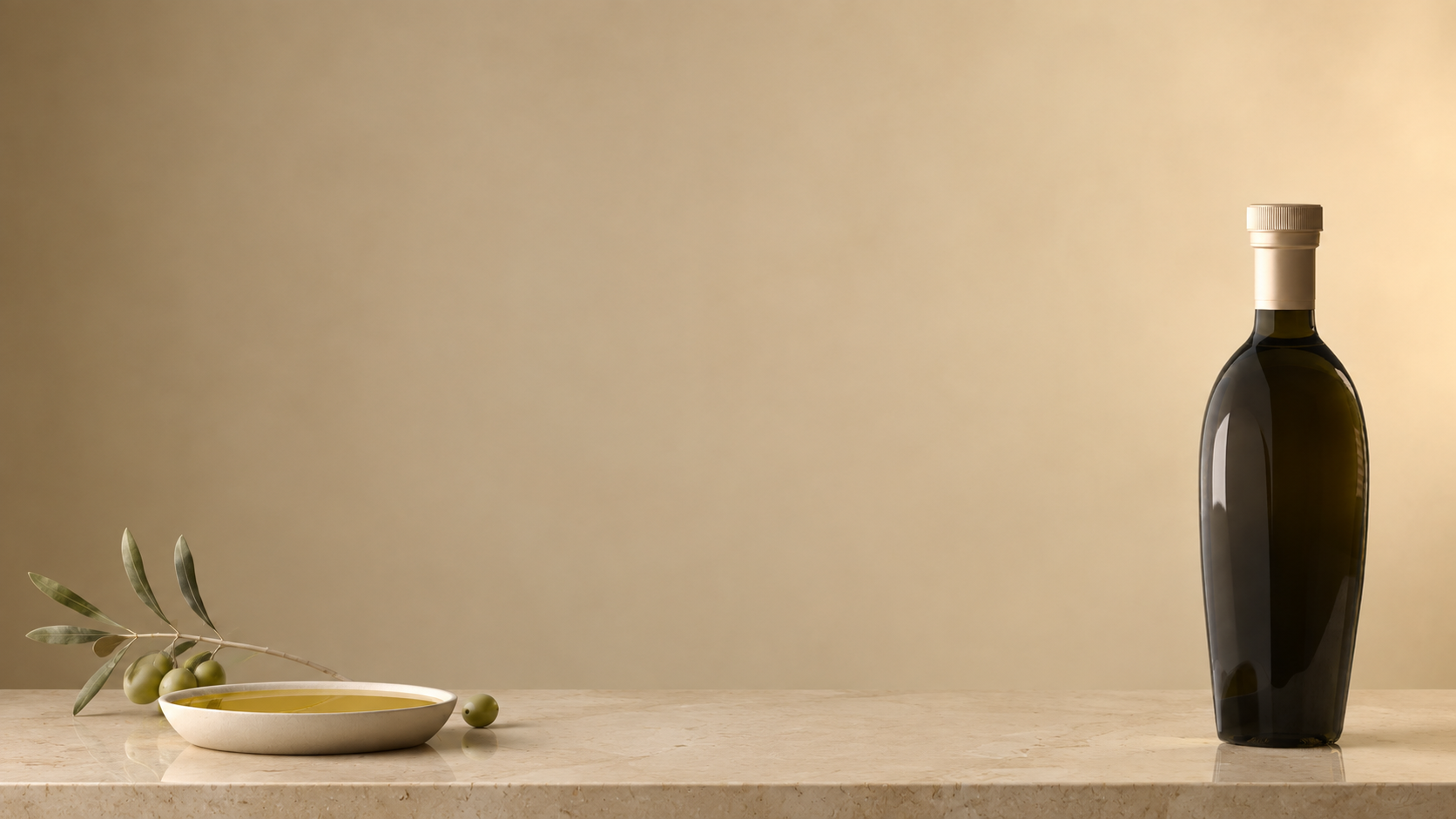
TABEA · OUR STORY
We do not own this land.
We continue its story.
Denizli · İnceğiz
01 — ROOTS
Before there was an idea for a brand,
there was a place.
TABEA’s story did not begin with a business plan.
For us, İnceğiz is much more than a production area marked on a map. It is the village where we grew up, where friendships were formed and where summer days were spent beneath the olive trees.
Our first bond with these trees was formed long before we were old enough to understand the value of the oil they produced. We searched their branches for cicadas and played with our friends among the olive groves. The trees that were once simply the scenery of our childhood would take on an entirely different meaning years later.
Yet the memory of the land surrounding İnceğiz reaches much further back than our own recollections.
Ancient Tabae, whose remains can be found today around the district of Kale in Denizli, was one of the region's important settlements for centuries. At present, we have no archaeological evidence directly proving olive oil production in Tabae itself. However, material traces of olive cultivation and olive oil production found in the surrounding ancient basins of southwestern Anatolia reveal the product's long-standing place in the history of the wider region.
Our story does not begin with claiming this past as our own, but with the awareness that we live on the land that still carries its traces.
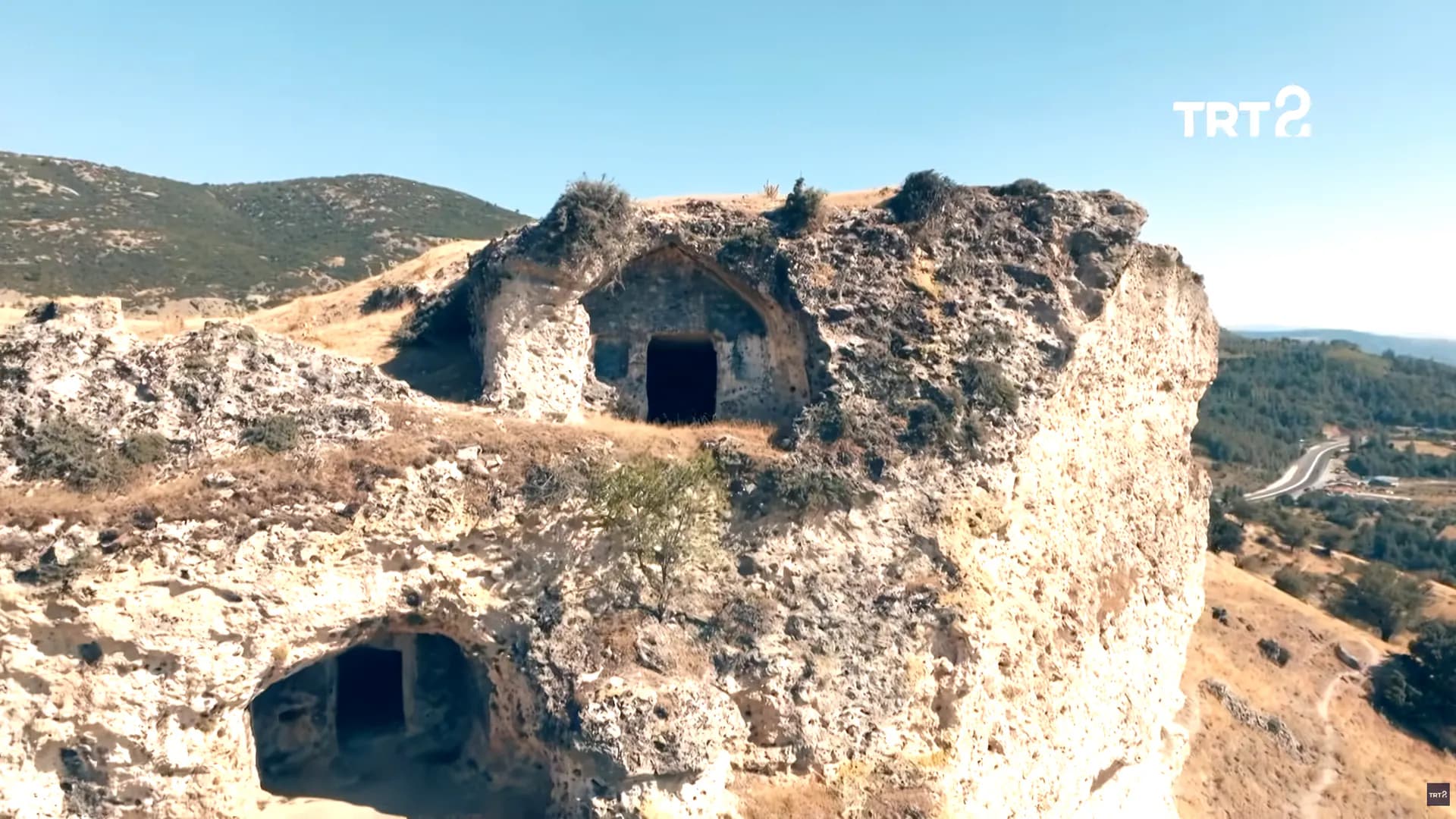
ANCIENT CITY OF TABAE
Kale · Denizli
02 — TODAY
Some things
are still here.
Centuries passed. Cities, roads and lives changed.
Today, İnceğiz still retains its distinct character through its dramatic canyon-shaped landscape, olive groves, vineyards, orchards and village life.
İnceğiz Canyon is not only one of the region’s most impressive natural formations. For generations, the lands surrounding the valley formed a fertile agricultural area that provided for its people and shaped village life.
Alongside olives, pomegranates, figs, grapes and peppers are among the crops that carry the character of this land. In İnceğiz, the elders had a saying to describe the fertility of the soil:
“Even if you planted a stone, it would bear fruit.”
One of the clearest expressions of İnceğiz’s relationship with nature can be found in the wild trees that villagers call “deli zeytin” and “deli nar”, local names for wild olive and wild pomegranate trees.
According to the village elders, no one knows who planted some of these trees. They formed part of this landscape beyond the cultivated orchards and, over time, were grafted by villagers and transformed into fruit-bearing trees.
For this reason, agriculture in İnceğiz is not simply a matter of planting something new in the soil. Sometimes it means recognizing what nature provides, cultivating it and passing it on to the next generation.
The transformation of wild olive into a cultivated olive tree, and wild pomegranate into a fruit-bearing tree through grafting, is a living example of the relationship between people and this land.
Years later, when we looked at the trees of our childhood through different eyes, it was certainly not memory alone that brought us back here. The aroma and low acidity of the olive oil produced in İnceğiz, together with our firsthand knowledge of its origin, showed us that something of genuine value here deserved our attention.
But for us, good olive oil is about more than laboratory results.
Within the bottle were a land, a culture of production and the work of people we knew personally.
This is where TABEA’s vision for its product took shape: rather than presenting an oil whose origin we do not know, we chose to pursue one whose story we know.
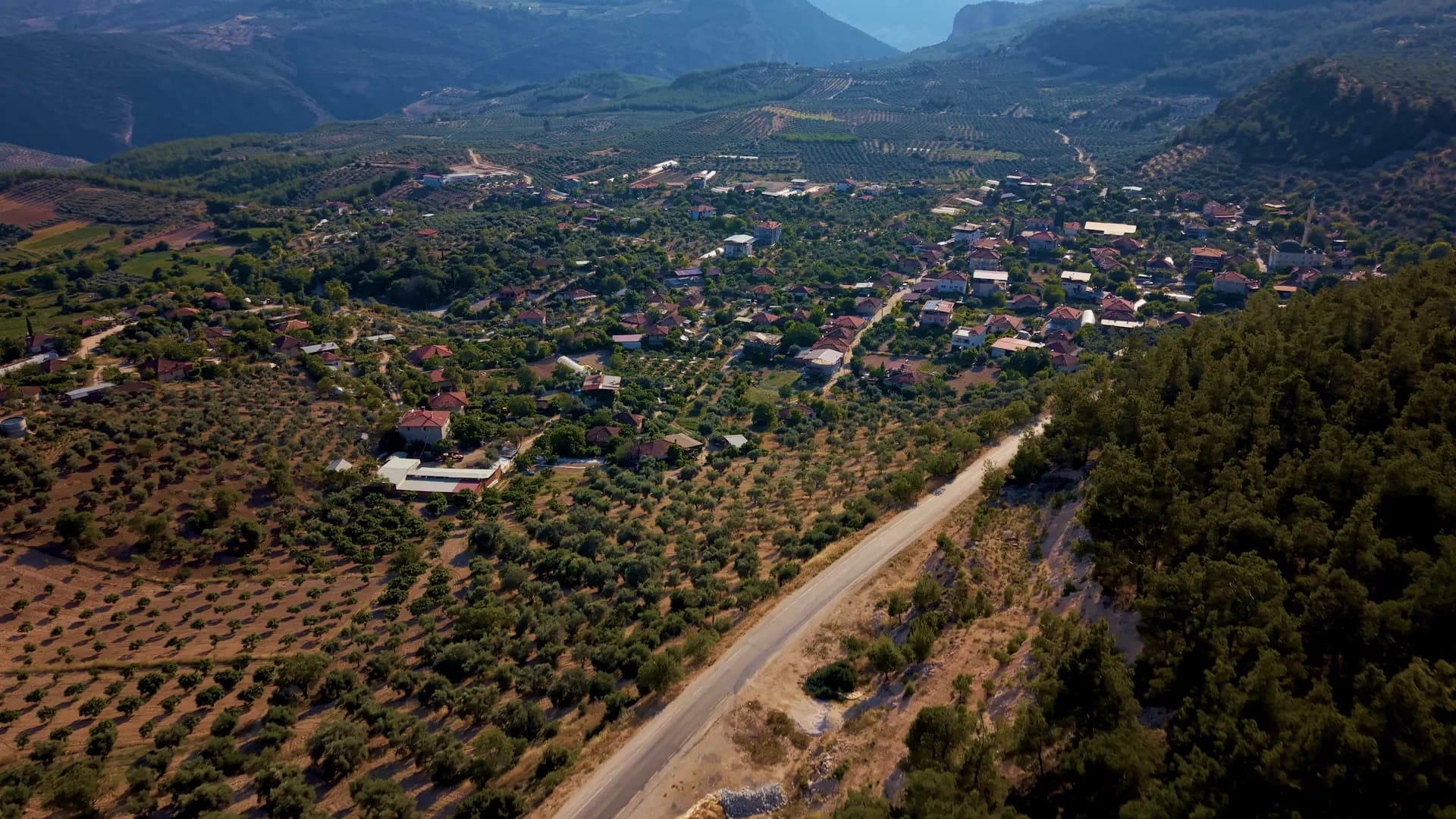
İNCEĞİZ
Denizli · Türkiye
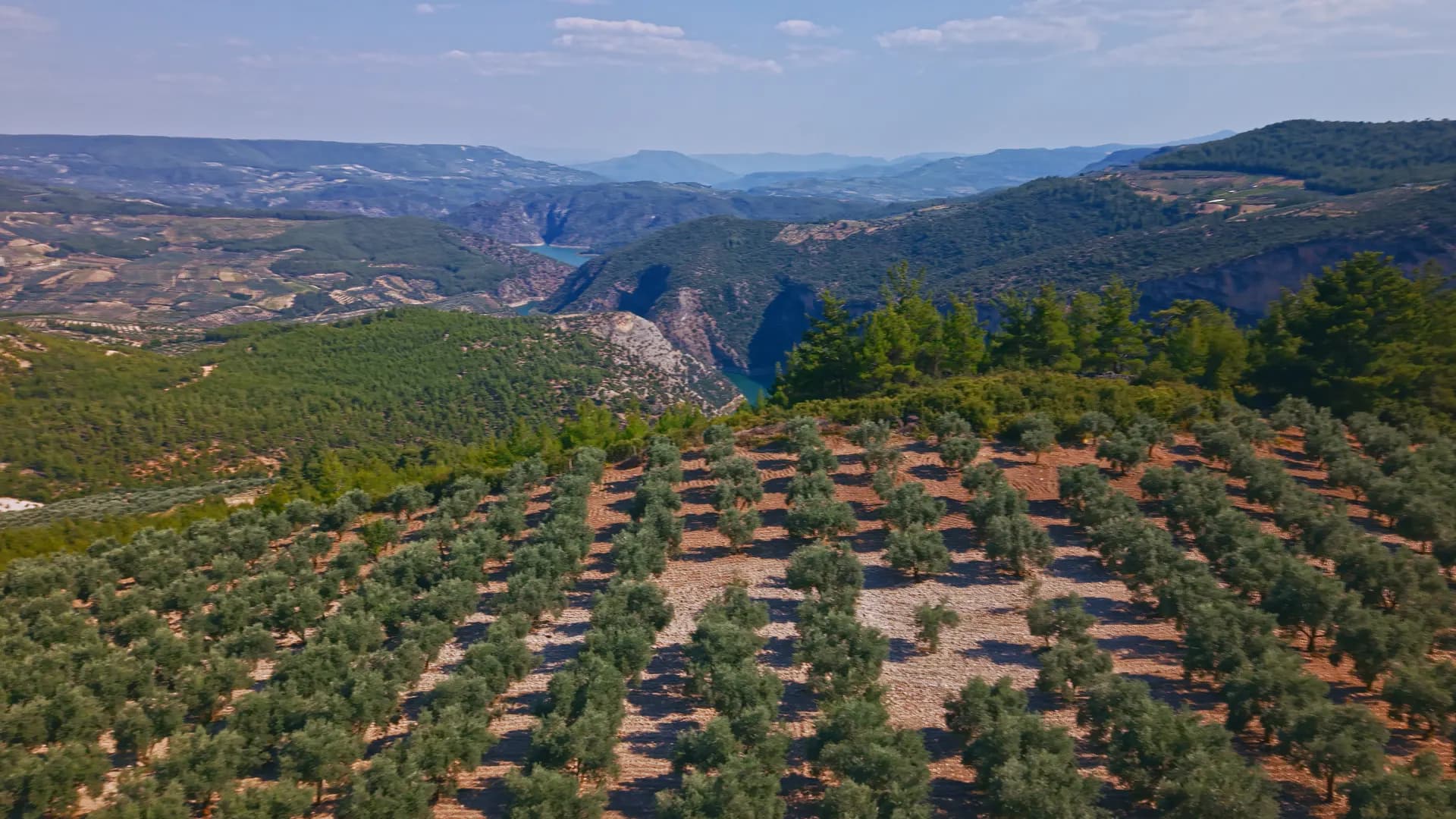
Olive Groves and Canyon
İnceğiz · Denizli
03 — WHY TABEA?
In a new life,
an old story.
In the early days after moving from Turkey to Belgium, I thought long and hard about building something of my own here. What I was looking for wasn’t simply a business opportunity; it had to be work that connected me to my past, carried a real story, and was worth sharing across Europe. The answer was somewhere I had known since childhood: İnceğiz.
TABEA
The name reaches back to a much older chapter in the region’s memory. The three-syllable name of ancient Tabae — short, strong and timeless — became the foundation of the identity I was looking for. Archaeological evidence of olive cultivation and olive oil production in this basin of western Anatolia dating back to antiquity reveals the deep roots of the region’s living olive-growing tradition.
An olive-growing culture passed down through generations, İnceğiz’s fertile land, and the singular landscape shaped by its canyon made this the natural birthplace of the idea. The thought of keeping this land’s story alive through an olive oil brand and carrying it to tables across Europe had long excited me.
TABEA was the first step in turning that excitement into reality.
04 — WHERE ARE WE GOING?
From İnceğiz
to Europe.
Our starting point is İnceğiz. Our ambition reaches far beyond it.
We do not want to build TABEA as a brand that simply buys and sells olive oil. In the long term, we want to establish our own production and processing infrastructure in Denizli, maintain control over our source and bring products rooted in İnceğiz's local agricultural culture to tables across Europe.
We want to grow. We want to succeed commercially. But we do not want to do that by leaving İnceğiz behind. We want to do it by strengthening our connection to it as we grow .
For us, true premium value is not simply an expensive bottle, a good label or an impressive story.
It means knowing where the product comes from, measuring its quality, respecting the producer's work and genuinely standing behind the story being told.
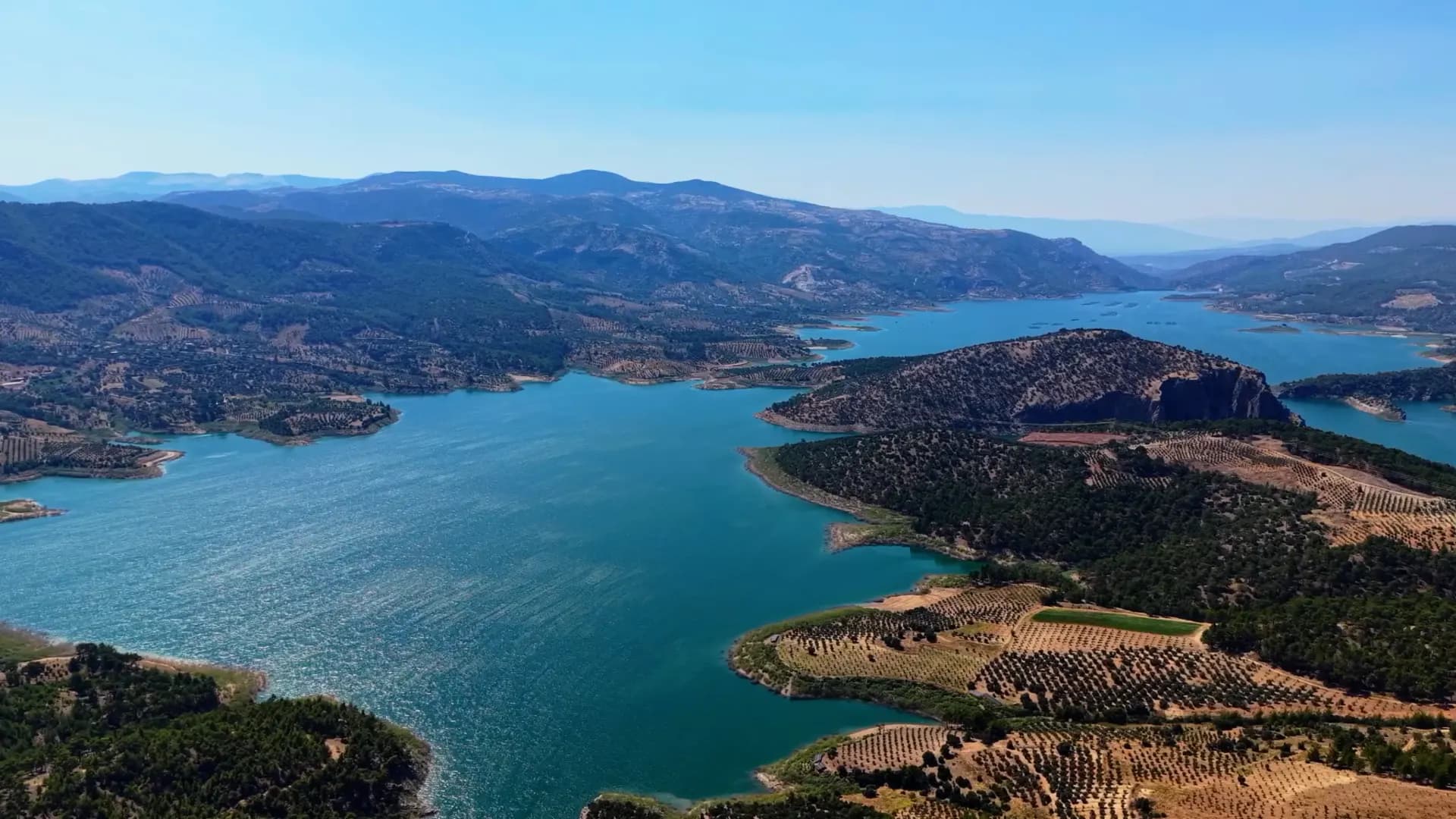
İNCEĞİZ CANYON
İnceğiz · Denizli
05 — TABEA
We are not trying to recreate the past.
We do not tell the history of Tabae as if it were our own. Nor do we claim that İnceğiz has remained unchanged for centuries.
We simply know where we come from.
Today, we look differently at the olive trees where we once searched for cicadas as children. We believe that the oil produced from the fruit of those same trees can reach tables thousands of kilometres away.
Some trees do more than bear fruit.
They carry time as well.
TABEA
From the past to your table.
TABEA · FILM
Watch the story.
TABEA
İnceğiz · Denizli